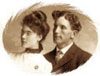
Huwelijksakte Johan Aikema en Emma Wilhelmina Maria Habets
Aktenummer:
661
Akteplaats:
's-Gravenhage
Aktedatum:
22-05-1905
Huwelijksplaats:
's-Gravenhage
Huwelijksdatum:
22-05-1905
Bruidegom:
Johan Aikema
Vader bruidegom:
Hendrik Gerard Aikema
Moeder bruidegom:
Sara Lessing
Bruid:
Emma Wilhelmina Maria Habets
Vader bruid:
Laurens Joseph Habets
Moeder bruid:
Sidonie Elisabeth Ghijsen
Toegangsnummer:
0335-01 Ambtenaar van de burgerlijke stand van de gemeente 's-Gravenhage
Inventarisnummer:
786
Margaretha Pauline Aikema
Voornaam: Margaretha Pauline
Achternaam: Aikema
Beroep: zonder beroep
Leeftijd: 45 jaar
Toegangsnummer:
0335-01 Ambtenaar van de burgerlijke stand van de gemeente 's-Gravenhage
Inventarisnummer:
1559
Marinus Jacobus Emilius Aikema
Voornaam: Marinus Jacobus Emilius
Achternaam: Aikema
Geboorteplaats: Amsterdam
Beroep: eerste Luitenant bij de Generale Staf, onder gouverneur van de prinsen, zonen van de Prins van Oranje
Leeftijd: 36 jaar
Overlijdensdatum: 24-01-1849
Moeder:
Neva Elisa Jones was born 23 January 1880, near the small town of Rodman, Iowa; during a blizzard, it is said. Her mother, Eliza, died the next day. Her mother’s death colored all of Neva’s life. In later years, Neva often talked about her mother, how she had played the violin and been a wonderful muscian; how she had died because she had contracted the measles, and that is why she died. Neva was the youngest of at least twelve children, two of whom are known to have died before Neva was born. The two oldest living children, both boys, had already left home.
Neva’s father, George Jones, had had trouble supporting his family before his wife died. With Eliza gone, caring for a large family was beyond him. He found people to care for the youngest children: Lottie, three years old and Neva’s closest sister, was taken by friends of Eliza’s into an already a blended family; Ona, five and next youngest, was taken in by an older couple who lived in neighboring Dickinson County; Reuben, six, eventually found a home with a near-by farmer. Likely Edward (ten) and Henry (twelve), also found homes with farmers either in Palo Alto or neighboring counties. Frank, at fourteen, was probably considered old enough for a full-time job. Anna, at fifteen the oldest still at home, apparently assumed responsibility for Neva, along with becoming a school teacher. Anna had help from her mother’s sister, Charlotte Bliss, whose family moved to Palo Alto about this time, providing a place for Anna and Neva to live.
In spite of their separation, Neva’s brother’s and sisters made an effort to stay in touch with each other, visiting when they could, writing when they couldn’t. Reuben, for example, had an autograph book, which he treasured for his entire life. It was signed by his brothers Dell and Stephen in 1895, his brother Henry in 1896, and his sisters Neva and Anna in 1901. Their father did return home at least once, but the visit was not remembered with any fondness by his children. Part of his reason for visiting was an effort to find financial assistance, at their expense if need be.
By 1900, when Neva was twelve, she, Anna, and Henry were living near Milford, in neighboring Dickinson County, where Henry farmed. Likely their brother Edward, newly married and living nearby, had lived with them for a time, as well. Many of Neva’s childhood memories seemed to center on her time around Milford. All her life she kept a cookbook published by the Ladies Aid Society of the Milford Methodist Church, along with other mementos of the area.[20] It is likely here, as well, that Neva and a friend worked for the Chautauqua, one of the highlights of her youth. Then Anna became ill, bed-ridden with tuberculosis. Her only hope of survival, she was told, was to move immediately to Colorado. By 1907, when Neva was nineteen, Anna was living in Denver and Neva was teaching school in Kenmare, Ward County, North Dakota.[19]
At the time of Anna’s illness, three of Neva’s brothers had moved to North Dakota, presumably seeking land. Henry was in Wahpetan, in southeastern North Dakota, by 1902, accompanied or followed soon after by his brother Edward. Reuben, their younger brother, moved further north and west, arriving in Tioga, North Dakota in June of 1903. About three years later, he applied for a homestead grant, and received the patent in 1909 for land in Montrail County.
As for Neva’s other brothers, Frank, who had been fourteen when their mother died, was working as a coal miner in southern Iowa when he enlisted in the army in 1898 for the Spanish-American War. He probably felt that life in the army would be better than work in a coal mine. He did write home about life in boot camp, but like so many others, he never had an opportunity to experience the “glory” of war. Within three months of enlisting, still in boot camp, he died of typhoid fever.
Stephen, the next to oldest brother, away from home when their mother died, remained in Iowa, where he, too, died young. He was run over by a train in a snowstorm, leaving a pregnant widow and two young children, who stayed in Iowa where her family was. Dell, the oldest of the brothers and also away from home when their mother died, married in Iowa twice, both wives dying young. He eventually moved to Wyoming.
Neva’s other sisters, Ona and Lottie, both married, and both remained in contact with other family members, but they were not part of the initial North Dakota migration.
Neva apparently went with her brother Henry to North Dakota, or perhaps joined him there. Like other single young women, she found work as a school teacher, and like many young school teachers at the time, her own education may not have been more than a few steps ahead of her students. Certainly, in later years, neither her handwriting nor her spelling would have been seen as models to emulate, and she herself was a strong advocate for education, feeling that her own was sadly lacking.
Being a young woman more or less on her own apparently didn’t worry Neva, though. It is said that she carried a pearl-handled derringer, and loved to ride, often seen racing the wind across the prairies, her long hair streaming behind her. And it was through her work as a teacher that Neva met her future husband, George Knott.
Marriage and Motherhood
Neva and George were married on 17 March 1909 in Wyndmere, North Dakota, where her brother Henry lived. How they met is unclear, but most likely when Neva was in Kenmare, Ward County, North Dakota.[19] Neva and George spent the first years of their married lives in a sod house on George’s homestead near Powers Lake, North Dakota. In later years Neva had few good things to say about life in a sod house. Even with sheets up on the walls and ceilings, she said, there was always dirt, and it was impossible to keep the house clean. It did have one advantage: when one of her young sons had a temper tantrum, she simply poured a pitcher of water over him, knowing that the floor would dry by itself. Her subdued son was set on a rock in the yard to dry in the sun.
Neva’s approach to child rearing was practical. Farm wives were busy, their work an essential part of the family’s economy. Neva knew many ways of ensuring her boys were safe while she worked. A baby in a highchair would be given a feather after having his hands dabbed with molasses; a crawling child could be tethered to a table leg with a soft rope of rags to keep him out of danger.
Not her all strategies worked as intended. Once, when her youngest son was still in diapers, she put him in a rabbit hutch so that she could hoe the garden. After some time, she heard a loud scream and went running, fearing the rabbit had bitten her son. Instead, it was the rabbit screaming – her son had used a diaper pin to stick the rabbit’s ears together. Another time, when the boys were older, all in school, they had left their clothes strewn around the bedroom rather than hanging them up. So Neva threw them out the window, for the boys to retrieve when they came home. But it started to rain, and Neva had to bring the clothes in herself.
Marriage and motherhood did not automatically turn the derringer-carrying young woman into a sedate matron. Soon after her marriage, a friend was coming to visit. Neva’s husband, George, had a mustache, of which he was inordinately proud. Neva didn’t like it. The night before her friend was to arrive, Neva managed to shave off half the mustache while George slept, assuming that he would shave the other half the next morning. But they overselpt, and George dashed out of the house without looking in a mirror, drove to Minot and returned with Neva’s friend, all with half a mustache. After moving to Washington, Neva had a dog, a collie, “before they became over-bred”, a dog intensely loyal to her. At least one summer night she and the dog and her sons, “camped out”, sleeping outdoors. Another time, angry with her husband, she sicced the dog on him and had him dancing on the kitchen table.
Although not outspoken, Neva had opinions on many subjects. She believed strongly in family – and whatever her personal feelings towards an individual, if they were family, they were welcomed. Similarly, she usually felt that consideration and politeness were owed to most people she met. Except, perhaps, her father. And except her husband’s Uncle Charlie, who she felt was a scoundrel, and would not hear a good word said about him. She refused to refer to the cattle ranch where she and her husband lived after losing their homestead as a ranch – it was a stock farm, she insisted, and the men who worked there were not cowboys, they were hands. There were other subjects she negotiated by maintaining silence – having to work out of the home during the Depression, and the illness of one of her sons that led to the loss of the North Dakota homestead, for example. And she didn’t like mountains, in spite of having lived most of her adult life surrounded by them. They cut off the view, she explained.
Later Years
When Neva’s husband retired, they moved from their farm to a home in Sedro Woolley, one that had electricity. Throughout her married life, from the sod house in North Dakota to the log house “up the hill“ from Clear Lake, Washington and it’s eventual replacement with a frame house, Neva had lived with kerosene lamps, wood cook stoves, and flat irons heated on the wood stove for ironing. Electricity was something she appreciated, so much so that when their farm house did receive electricity, she had to visit just so she could go from room to room flicking the switches.
One of the attractions of Sedro Woolley, other than electricity, was the nearness of her son Gordon and his family. When Gordon moved to Kennewick, Neva and George followed, and then again to Walla Walla. By then George was crippled with rheumatism in his knees and suffering from Parkinson’s disease, for which there was no known treatment. Neva turned to charismatic Christian preachers for a cure, but to no avail. George died in January 1962. For a brief time in the latter half of the 1960s, Neva lived in Olympia Washington, near her youngest son Norman and his new family, but returned to Kennewick when Norman moved out of the country. There, with increasing senile dementia and Gordon as her caregiver, she turned to her Bible for solace, passing away on 3 May 1985. She is buried next to her husband George. There are no mountains to obscure her view.
▼ Early Years
Tjeert Hendricks Knot, third son of Hendrick Pieters Knot and Jantje Jans Knol, was born on the 23rd of January 1825, in the small village of Stitswerd, Groningen Province, the Netherlands.[1] During the first two or three years of his life, he and his parents lived with his grandparents.[2] Having an extended family living in the same house was unusual, and may have been a reflection of increasing economic pressures for ordinary people in the Netherlands at that time.
Tjeert received a basic education, sufficient that he could at least sign his name. By the time he was fourteen he was working, as was traditional for many young people, on a nearby farm. The farm was large, employing five other young people between the ages of 17 and 21, including his youngest uncle, Lambert Pieters Knot.[4]. Sometime during the next ten years Tjeert found work as a servant in the home of a local landowner in Stitswerd. It was likely here that he met his future wife, Imke Willems Pesman, who worked as a farm maid for the same family.[5]
Tjeert and Imke were married on the 19th of October 1852, with Tjeert’s mother and Imke’s father as witnesses. Tjeert and Imke remained in Stitswerd, where Tjeert worked as a day labourer. In many ways Tjeert and Imke probably lived much as Tjeert’s parents had, except that Imke also worked as a day labourer.[6] Again, the fact that more and more women were working for income was another indication of increasing economic stress throughout the country. Economic stress is probably also why Tjeert’s brothers had all moved away from Stitswerd by about 1860, seeking employment in larger communities and cities. Tjeert and Imke were the last to leave, moving to Warffum in June of 1869 with a family of six children.[7][8] Their oldest son, Hendrik, had already moved to Warffum to find work, and Tjeert had cousins there, the children of his mother’s youngest brother, Tjeert Jans Knol.
In Warffum, the family lived beside a canal, possibly three canals where they came together, and there they had a tavern. In the winter, skaters would stop for food and a drink, or even for new skates, since Tjeert made skates. During the rest of the year, boaters on the canal would stop.[17][18]. Their oldest daughter, Grietje, although living at home, apparently added to the family income working as a tinker, someone who repairs tin utensils. The younger children, in the way of children everywhere, were curious about the world around them, and one day Imke found three of them, Willem, Jantje and Pieterke, sampling the remains left by tavern customers, including the sweetened alcohol in the bottom of the cups. Imke grabbed an axe and chopped down the tavern sign. Her children would not drink alcohol![18]
▼ Emigration
Tjeert and Imke’s oldest son, Hendrick, was already in the United States and had written home urging his parents to join him. So they left Warffum early in 1873, traveling first to Liverpool, England. Liverpool was not an easy stop for everyone in the family. Willem, for one, was subjected to ridicule for his strange clothes and wooden shoes. Not the shyest of young boys, Willem promptly used the Edam cheese he was carrying to hit the other boy over the head.[18]
In Liverpool Tjeert and family boarded the Wyoming for New York City. As they sailed into New York harbour on 15 May 1873, they were no doubt exhausted. Like so many immigrants, they had traveled steerage.[9] The Wyoming was a new ship, barely two years old, and fast, averaging 10 days for a trip. But with over 1300 passengers in steerage, it would still have been crowded and miserable, with a babble of langages and a lack of privacy. Passengers came from Ireland and England, Germany, the Scandanavian countries, and France, as well as the Netherlands. Three died during the voyage, while one woman gave birth in the midst of the babble.[19]
When Tjeert, Imke and family arrived in New York, they were not greeted by the Statue of Liberty, nor did they pass through Ellis Island, as neither yet existed. Instead, they would have gone through the old immigration centre known as Castle Garden. An old fort at the southern end of Manhatten, Castle Garden opened in 1855, to “process” arriving immigrants. Operated by the State of New York, it reflected changing attitudes towards immigrants, and remained in operation until 1890, when the Federal Government assumed responsibility for immigration. [20]
▼ Chicago
From New York the family most likely took a train to Chicago, already recovering from the fire that devastated much of the city core in 1871. Tjeert may have found work there as a laborer for a year or two, living with his family in a small duplex at the back of a cottage at 813 S. Morgan. The neighborhood (now the Near West Side) was known as Groningen Quarter, with many residents having immigrated from Groningen province. Tjeert and family would have felt partially at home, surrounded by neighbors who spoke Dutch, and within easy walking distance of the First Dutch Reformed Church, the center of community life.[10][21] Tjeert and Imke did change their names, to George and Emma, one of the few concessions they made to living in a new country. They had come to America not to become Americans, but to live a better life. They had no desire to give up their Dutch identity, and in this respect they were little different from other Dutch immigrants to Chicago in the latter part of the nineteenth century.[16]
By the time George and Emma arrived, however, the area was becoming a destination for immigrants from eastern Europe, those for whom Jane Addams created Hull House near-by. It was probably not the better life they had envisioned when they emigrated. By 1880, George and Emma and three of their children were living west of Chicago in an area heavily populated by German immigrants, most of whom were farmers, and George was renting a farm. The older children continued to work in Chicago, while the baby, Jana, and another daughter, “little lame Anna”, had died[11]
▼ Minnesota
Even with the move out of the city centre, George and Emma were still not happy, and it wasn’t long before they moved again, this time to the settlement of Roseland in Minnesota, another community of Dutch immigrants. Here George and his son William were able to buy land. They bought from a land development company, based in Chicago, Minneapolis, and the Netherlands and supported by Chicago’s Dutch churches, that promoted a “Nieuwe Hollandsche Kolonie” near Olivia, Minnesota. In 1885, George and William purchased 320 acres of land.[22]
As important as the land was, it was only part of a better life. By 1886 George, his family and neighbours, had organized a church, the Roseland Reformed Church. The first services were held in William’s barn. By 1890 they had built a church.[23] During this time as well, George’s children, all except his oldest daughter Grace, settled near by, beginning and raising their own families.
George died 21 February 1897, at the age of 72, secure in his church and his community, having gained the better life he sought for himself and his children, the first in a long line to leave a landed estate.
▼ “Any Work I Could Get”
George Knott was born near the highly urban context of Chicago, Illinois but spent most of his life in rural or semi-rural areas, not necessarily out of choice. He once said that he “took any work I could get”, and that plus his efforts to acquire land, the land that he likely saw as a form of security, provide a framework for much of what happened in his life.
▼ Chicago and Minnesota
George was born 17 June 1885 in Maywood, Illinois, a suburb west of Chicago.[23][1][20] Two years later the family was living in Melrose, just eight miles north, where George’s oldest sister was born. Then, when George was about three, his family moved to Lone Tree Township in Chippewa County, Minnesota, where his father felt called to serve as a lay missionary.
About the time George was five the family moved again, to Perham, Ottertail County.[13] Here, George's father served several years as a lay, or supply, minister to the Methodist Church. Because the pay for supply ministers was minimal, the family was dependent to some extent on charity, and George's youngest sister talked in later years about getting clothes for the family from a barrel sent them by the Missionary Society.[26]
When George was about ten, the family returned to Raymond, in Kandiyohi County, where the extended family was settled. Then George's father died, leaving George the oldest male in the family at the age of 14, with five younger siblings. An unmarried uncle came to live with the family, possibly to help with whatever farm chores needed attention.[14] George's mother had no experience with farming. Instead, she apparently worked as a midwife or helped nursing the sick, and the older children helped out as best they could. George worked out for the neighbors so that he didn't have to be home for board, and to pay for his clothing and other expenses. One year George tried raising purebred chickens, even investing in an incubator, but presumably that experiment proved less successful than hoped, as it was not repeated.[26]
George's mother had a cousin living near Chicago who offered to pay for George's education, and George may have spent a year in Chicago attending school. His youngest sister believed that he attended the Moody Bible Institute,[26] but that may have been what their mother wanted. The Institute has no record of George ever attending.[27] What George wanted was to be a lawyer. George's mother, however, considered law unfit work “for a God-fearing man. She said all lawyers were crooked, and she didn't want her son to be a lawyer”.[26] So George went west, probably with others from the area of Raymond, perhaps first to Denver, Colorado,[28] but eventually to northwestern North Dakota.
▼ North Dakota
In North Dakota George continued to work at any job he could get, including coal mining.[23] But the real attraction of North Dakota for George was probably the opportunity to own land, something his father had never done. Land for much of the rest of the family had provided the basis for financial security, however hard the work was. When George applied for a homestead, in the fall of 1905,[23] he provided a covering letter stating that:
"I am a native born citizen of the United States, and that I will be 21 years of age June 17, 1906; that my father died about six years ago without leaving any means of support for my old and feeble mother and three younger brothers and sister[29]; that I have a brother 11 years and one 14 years of age and a sister 9 years of age; That I am the head of the family in that I have furnished all the means of support for my old and feeble mother and two young brothers and sister, and that I have furnished the exclusive support for the family ever since my father died six years ago to the present time and that I must and will continue to do so for the future, that my mother, brothers and sister have no other means of support except myself; that I am the head of the family in all that goes to furnish a home and neans [sic] of support for my old and feeble mother and brothers and sister.”
Since George's mother was almost universally described as "formidable" by those who knew her,[30] the statement that she was "old and feeble" may have been formulaic, emphasizing his need for the land.
Like others who homesteaded, George worked to improve his claim, building a small house (eight by 12 feet) and a larger barn (sixteen by thirty feet), and breaking soil for crops. He also continued to work off the farm to earn money for expenses and to send home to his mother. During the summer he worked as a school teacher, coming home for the week-ends.[23] He also seems to have been active in the local community, as he was apparently a school trustee who helped his sister Ethel get a job as a teacher one summer during this period.[26] This may also have been how he met his future wife, Neva, for she, too, worked as a school teacher before their marriage.[31]
George continued to work part time off the farm after his marriage. His occupation in the 1910 census is listed as bookkeeper for the local bank,[15] the bank owner being one of George's neighbors. For all that he was hardworking and involved in the community, George seems to have had a somewhat romantic streak, as well. He was quite proud of the mustache he grew (although his wife hated it),[31] and in a photo of him taken with his plow and team during this time period, his hat has a definitely rakish appearance.
Nor was George without a temper. His wife Neva suffered complications and nearly died giving birth to their youngest son. The attending doctor was drunk, which did not help matters. George waited until mother and child were safe, then took the doctor outside and beat him up, exacting a rough and immediate justice. [31]
According to family stories George and Neva continued to live on their homestead until the winter after their youngest son was born, when they sold the farm to a local rancher and spent that winter working for the rancher. George worked as a cow or stock "hand", and Neva worked as a cook. Come spring, they left North Dakota , their youngest son still in diapers, and travelled by train to Skagit County in Washington. [31] This would have been the winter and spring of 1917-1918.
According to documentary sources, however, the farm was sold in June 1914.[3] It's possible that the family needed the money to pay medical expenses, as Neva mentioned one time that one of her older sons had to be taken to the hospital in Minneapolis, Minnesota when young, although she refused to elaborate. [31] Whatever the reason, George did later investigate the possibility of making a second homestead claim, but because he had sold his first claim, he was ineligible.[23] It's also likely that the journey to Washington state was made in at least two stages, as when George's youngest brother Carlton wrote to their mother in 1918,[32] he said he did not know where George was, whether he was in ”Sand Point or Kootinia”, both places in Idaho. By September of that year, however, the family was in Sedro-Wooley, Washington, where George worked for the Carnation Dairy Company.[1]
▼ Washington
In Washington, George and Neva soon bought a house in the town of Sedro-Woolley.[4] But George wanted more. He is said to have purchased land to start a dairy farm, taking out a bank mortgage to do so. Interest rates on the mortgage were said to be predicated on a strong dairy cream market. Shortly after taking out the mortgage, the bottom fell out of the dairy market.[33]
Documentary records tend to bear out the family story. Spurred by the war, the agricultural economy in the Skagit Valley was booming when George arrived. Dairy men, among others, were challenged to meet wartime demand,[34] as George clearly would have known, working in the dairy industry. George did buy land for a farm.[5] The farm land was in the hills above Clear Lake, less suited than the valley itself for agriculture. Straddling a logging road known as the John Day Creek Road, (or Old Day Creek Road as it is now known), it, too, was purchased with a private mortgage.
Unfortunately, George’s purchase was not well-timed. With the war ended, the dairy market collapsed and the economy of the Skagit Valley went into a serious recession.[35] Either in order to help make payments on his mortgage or to buy a house in town, in February 1922 George sold part of the farm, with a private mortgage, to his brother Ray in Montana, who had a well-paid, steady job.[5] Ray in turn, seems to have sold his share of the farm about 1930, again on private mortgage, with the sales being finalized in October 1939.[36]
On the farm, the family lived in a log house, possibly on that part of the land purchased by his brother Ray. In the late 1930s George built a new frame house about a half-mile up the road. The log house burned down in the 1950s and no longer exists. In the meantime, George seems to have re-negotiated the mortgage for the remaining portion of his land in 1928, with the mortgage taken over by the First State Bank of Clear Lake and paid in full in 1933.[5]
George continued to believe in property ownership, for in April 1922 he purchased a house and lot in Clear Lake.[6] Presumably the property was sold at bargain prices, as it had been owned by the Clear Lake Lumber Company, previously the economic mainstay of the area. But lumber companies, like farmers, were suffering from the recession. Then a fire destroyed the company mill in 1921. After at least one abortive attempt, the mill finally re-opened in February 1929, only to be hit by the failure of Wall street later in the year.[37] George resold the house and lot late in 1925, when it looked like the mill would re-open. He assumed a private mortgage, but the new purchasers were unable to make the payments on the mortgage and defaulted in January 927, presumably because the mill failed to remain open. For once, fortune was on George’s side, as the Clear Lake Lumber Co. was involved in legal battles to settle its own debts and full ownership of the town lots was granted to George by the courts for the amount he had already paid.[6]
By this time other members of George’s family were congregating in Clear Lake. His mother and step-father had arrived early in 1920, purchased a house and lot on 17 May 1920, then a farm along the Lake in December of that year. George’s sister Ann and her husband arrived in 1922, and his sister Ethel and her husband about 1929. Who, if any, of the family occupied the house is unknown, but it was sold, this time successfully, in June 1930. [6]
The Great Depression of the 1930s hit the Skagit Valley hard. Men lost their jobs, companies failed, hobo camps grew. As in other areas of the country, public construction of roads, bridges and other infrastructure projects often provided the only form of economic relief. .[38] George was among those who worked at road building, and it was to this period of his life that he referred when he said that he took "any work I could get”.[39]
The 1940s brought some measure of prosperity to the Skagit Valley, although little of it reached the town of Clear Lake. Logging continued to be the major economic activity, and George worked as dynamiter in the logging camps while continuing to farm until his retirement. He was active in the community, belonging to the local Grange,[11] and may have been a School Board Trustee.[31]
▼ Retirement
In 1950 George retired, selling the farm and moving to Sedro-Woolley where one of his son's lived. When that son moved to Kennewick, Washington, George and his wife Neva followed, and then again to Walla Walla, Washington, where he died on 22 January 1962.[2]
Pagina in bevolkingsregister
Pagina 25
Geregistreerde:
Aikema, Michiel Willem Arie
Toegangsnummer:
0275 Bevolkingsregisters Edam, Volendam, 1850-1939
Inventarisnummer:
30a
Pagina:
25
Notabene:
Als u in de strook hieronder geen (groen) gemarkeerde scan ziet, dan betekent dit dat de kaart nog niet openbaar is. Lees meer informatie over Bevolkingsregisters en gezinskaarten
Pieter Aikema
Overlijdensdatum:
29-10-1961
Overlijdensplaats:
Openbaar Lichaam "De Noordoostelijke Polder"
Toegangsnummer:
0787 (Dubbele) Registers van de Burgerlijke Stand van de gemeenten, gelegen in de huidige provincie Flevoland
Inventarisnummer:
66
Kunegonda Margritta Sjoerts
Toegangsnummer:
1221 Burgerlijke Stand van de gemeenten in de provincie Utrecht 1943-1950
Inventarisnummer:
1984
Aktenummer:
87
Overlijdensakte
Overlijden Alice Edith Hagen, 17-1-1966
Overledene:
Alice Edith Hagen
Voornaam: Alice Edith
Achternaam: Hagen
Geslacht: V
Leeftijd: 79
Overlijdensdatum:
17-1-1966
Overlijdensplaats:
Zeist
Aktedatum:
18-1-1966
Akteplaats:
Zeist
Partner:
Gehuwd met Hendrik Bernard Jan Aikema
Voornaam: Hendrik Bernard Jan
Achternaam: Aikema
Relatie tot: Gehuwd met
Vader:
N.N. -
Voornaam: N.N.
Achternaam: -
Moeder:
N.N. -
Voornaam: N.N.
Achternaam: -
Opmerkingen:
Gegevens ouders onbekend.
Toegangsnummer:
1221-2 Burgerlijke Stand van de gemeenten in de provincie Utrecht 1961-1970
Inventarisnummer:
1937
Aktenummer:
34
Passagierslijst
Afvaart 'SS Sibajak' op 21-05-1952 vanaf haven Rotterdam
Vertrekdatum:
21-05-1952
Vertrekhaven:
Rotterdam
Scheepsnaam:
Sibajak
Van continent:
Europa
Naar continent:
Noord-Amerika
Reiziger:
K. Aikema
Voornaam: K.
Achternaam: Aikema
Titel: Fam.
Scheepsnaam: Sibajak
Vertrekplaats: Rotterdam
Aankomstplaats: Windsor
Toegangsnummer:
318-04 Archieven van de Holland Amerika Lijn (HAL): Passage A
Inventarisnummer:
1074
Folionummer:
90
Passagierslijst
Afvaart 'SS Groote Beer' op 20-02-1953 vanaf haven Rotterdam
Vertrekdatum:
20-02-1953
Vertrekhaven:
Rotterdam
Scheepsnaam:
Groote Beer
Van continent:
Europa
Naar continent:
Noord-Amerika
Reiziger:
Passagierslijst
Afvaart 'SS Noordam' op 20-07-1916 vanaf haven Rotterdam
Vertrekdatum:
20-07-1916
Vertrekhaven:
Rotterdam
Scheepsnaam:
Noordam
Van continent:
Europa
Naar continent:
Noord-Amerika
Reiziger:
H.B.J. Aikema
Toegangsnummer:
318-04 Archieven van de Holland Amerika Lijn (HAL): Passage A
Inventarisnummer:
924
Folionummer:
3
358.127-11892 Geboorteakten van de gemeente Velsen, 1892
Geboorteakte
96 Geboorteakte Louise Maria Aikema, 19-04-1892
Geboortedatum:
19-04-1892
Akteplaats:
Velsen
Aktedatum:
20-04-1892
Aktenummer:
96
Kind:
Louise Maria Aikema
Vader:
Ipe Aikema
Moeder:
Henrietta Maria Dolk
Toegangsnummer:
358.127 burgerlijke stand van de gemeente Velsen, Archiefdeel van (dubbele) registers van de
Inventarisnummer:
11892
Trijntje Zandstra
Overlijdensdatum:
31-12-1941
Overlijdensplaats:
Wieringen
Aktedatum:
02-01-1942
Akteplaats:
Wieringen
Toegangsnummer:
358.137 burgerlijke stand van de gemeente Wieringen, Archiefdeel van (dubbele) registers van de
Inventarisnummer:
31942
358.55-31941 Overlijdensakten van de gemeente Hilversum, 1941
Overlijdensakte
588 Overlijdensakte Louise Maria Aikema, 26-09-1941
Aktenummer:
588
Overledene:
Louise Maria Aikema
Vader:
Ipe Aikema
Moeder:
Henrietta Maria Dolk
Partner:
Heinrich Altevogt
Overlijdensdatum:
26-09-1941
Overlijdensplaats:
Hilversum
Aktedatum:
27-09-1941
Akteplaats:
Hilversum
Toegangsnummer:
358.55 burgerlijke stand van de gemeente Hilversum, Archiefdeel van (dubbele) registers van de
Inventarisnummer:
31941
Pagina in bevolkingsregister
Bevolkingsregistratie, Gezinskaarten
Geregistreerde:
Ipe Aikema
Henrietta Maria Dolk
Toegangsnummer:
494-03 Archief van de Gemeentesecretarie Rotterdam, afdeling Bevolking: bevolkingsboekhouding van Rotterdam en geannexeerde gemeenten
Inventarisnummer:
851-004
588-3750 Overlijdensakten van de gemeenten in de provincie Noord-Holland
Overlijdensakte
33 Overlijdensakte Hendrik Algra, 23-11-1945
Aktenummer:
33
Overledene:
Hendrik Algra
Vader:
Sijmen Algra
Moeder:
Aagje Ykema
Partner:
Lammerdina Aikema
Overlijdensdatum:
23-11-1945
Overlijdensplaats:
Nederhorst den Berg
Aktedatum:
24-11-1945
Akteplaats:
Nederhorst den Berg
Toegangsnummer:
588 burgerlijke stand van de gemeenten in de provincie Noord-Holland, Archiefdeel van (dubbele) registers van de
Inventarisnummer:
3750
Ida Wieringa
Overlijdensdatum:
13-04-1947
Overlijdensplaats:
Alkmaar
Aktedatum:
18-04-1947
Akteplaats:
Wieringermeer
Toegangsnummer:
588 burgerlijke stand van de gemeenten in de provincie Noord-Holland, Archiefdeel van (dubbele) registers van de
Inventarisnummer:
4077
A family tradition says the Knott family came originally from England, in the area between Scotland and Wales, and fled to The Netherlands because of religious persecution. While the story is not documented, neither can it be discounted.
Lancashire, one of the places in England where the Knott name is concentrated, is between Scotland and Wales. It is possible that some ancestors emigrated from England in the late 1500s or early 1600s. By that time, Protestant Reform was gaining favour in some parts of Lancashire, particularly in the southeast, and more particularly in the areas around Manchester. At the outbreak of the English Civil War, in 1642, many of these converts were Presbyterians, Calvinists who rejected the Episcopalian organization of church authority, but who also did not share the Separatist belief in the autonomy of each individual church. As Presbyterians, especially during a time when protestant belief was first developing in Lancashire, local Lancastrians could have faced opposition, if not outright persecution, for their beliefs.
In the city of Groningen, the name Knot, used as a family name, appears in church records at least as early as 1649. In the province more generally, the name appears by 1635 with leaseholders of lands confiscated from the abbeys at the time of the reformation.[1]
But Lambert did not live in the city of Groningen, nor was he a leaseholder. Perhaps he was descended from someone who had fled England two or three generations earlier, someone whose descendants dropped the family name in favor of the Dutch use of patronyms. Or perhaps not.